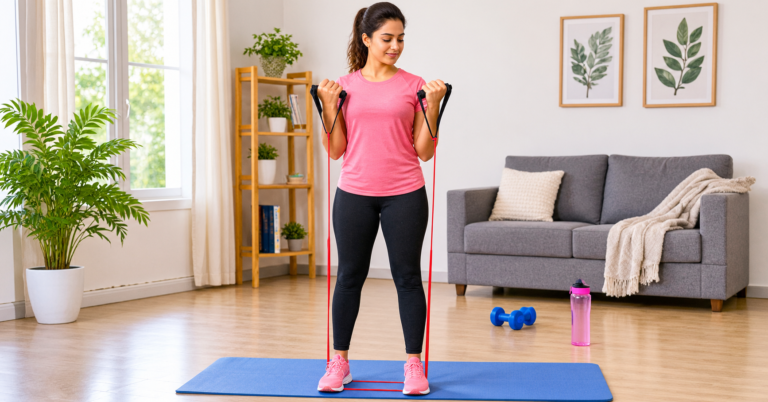
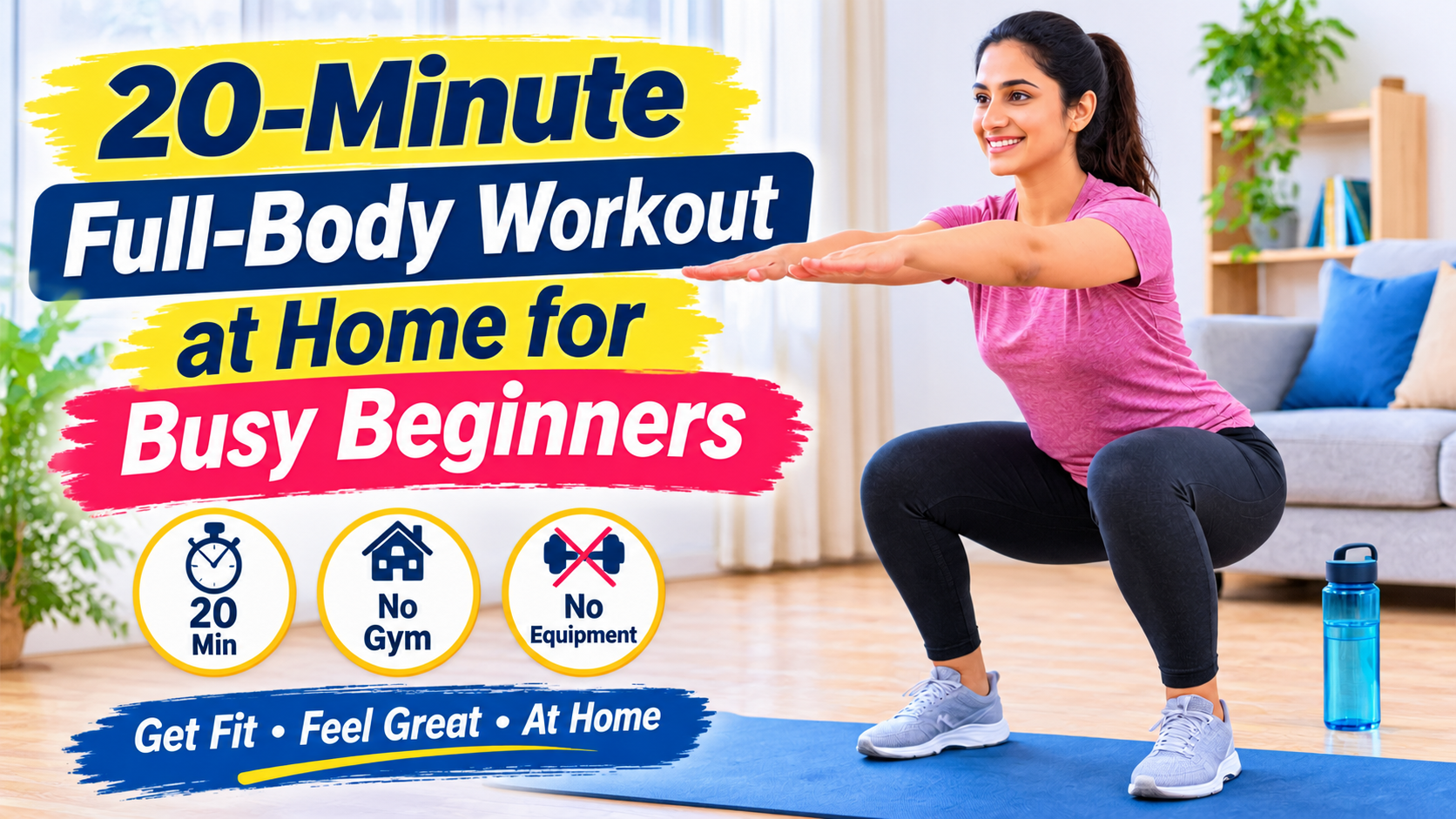
20-Minute Full-Body Workout at Home for Busy Beginners
This revised version includes images throughout the article, improved sentence variety, natural transition words, and complete SEO details for FitnesChat.com. It keeps the language simple and the exercise advice beginner-friendly.
Complete Article
You do not need a gym, expensive equipment, or hours of free time to start exercising. In fact, just 20 minutes can give you time to practice simple exercises at home.
A short workout can help you build strength, improve movement, and develop a regular fitness habit. However, it is important to start at your own level and use proper form.
This 20-minute full-body workout at home for beginners uses simple bodyweight exercises. As a result, you can follow the routine in your living room, bedroom, or another safe space without buying gym equipment.

Whether you work long hours, study, or care for your family, this routine offers a practical way to get moving. Best of all, you can adjust the exercises to match your comfort and ability.
Table of Contents
- What Is a 20-Minute Full-Body Workout?
- Benefits of Exercising at Home
- What You Need Before You Start
- Your Complete 20-Minute Workout Plan
- How to Do Each Exercise Safely
- How to Make the Workout Easier or Harder
- Weekly Workout Schedule for Beginners
- Common Beginner Mistakes to Avoid
- Tips for Staying Consistent
- Frequently Asked Questions
- Key Takeaways
- Conclusion
What Is a 20-Minute Full-Body Workout?
A full-body workout includes movements that work several major muscle groups during one session. This routine focuses on your legs, hips, chest, arms, shoulders, and core muscles.
The workout has three simple parts:
- Warm-up — 3 minutes: Prepare your body for movement.
- Main workout — 14 minutes: Practice seven simple exercises.
- Cool-down — 3 minutes: Slow down and finish with gentle movement.
During the workout, move at a pace that feels manageable. You do not need to rush or complete every repetition as quickly as possible.
Instead, focus on control, comfortable movement, and steady breathing. Remember, the goal is to build a routine you can repeat, not to exhaust yourself on the first day.
Benefits of Exercising at Home
Home workouts can be useful for people with busy schedules. They allow you to exercise without traveling to a gym or buying expensive equipment.
1. You Can Save Time
A gym visit often includes travel, changing clothes, and waiting for equipment. By comparison, a home workout lets you start when it suits your schedule.
For example, you might exercise before work, during a break, or in the evening. Therefore, fitting movement into your day may become easier.
2. You Can Build Strength
Bodyweight exercises such as squats, wall push-ups, and glute bridges help you practice basic strength movements. Over time, these exercises may become easier as your body adapts.
Once you feel comfortable, you can gradually increase the challenge. However, always focus on good form before trying harder versions.
3. You Can Practice Everyday Movements
Sitting down, standing up, stepping, and maintaining balance are all part of daily life. Practicing similar movements during exercise may help you become more comfortable with them.
4. You Can Work at Your Own Pace
Not every beginner starts with the same fitness level. Fortunately, you can reduce repetitions, use a wall for support, or take longer breaks.
This flexibility helps you choose movements that suit your current ability.
5. You Can Develop a Regular Habit
Long workouts may feel difficult to fit into a busy day. In contrast, a short routine may seem more manageable.
Although results vary, regular physical activity can support overall health. Your progress also depends on factors such as sleep, nutrition, recovery, and your starting fitness level.
What You Need Before You Start
You do not need special equipment for this beginner workout. However, a few basic items can make exercising more comfortable.

An Exercise Mat or Clear Floor
A mat can make floor exercises more comfortable. If you do not have one, choose a clean, non-slip surface that gives you enough room to move.
Comfortable Clothing
Wear clothes that let you bend, reach, and move freely. In addition, choose footwear that feels stable for your workout surface.
Water and Enough Space

Keep water nearby and move furniture or loose objects out of your workout area. Before starting, check that the floor is not slippery.
If you need extra balance support, exercise near a sturdy wall or stable chair. Never use a chair that can slide or tip over.
Finally, speak with a qualified healthcare professional before beginning a new exercise routine if you have a health condition, a recent injury, or concerns about exercising safely.
Your Complete 20-Minute Workout Plan
Use a timer if it helps you stay organized. Nevertheless, you can take extra rest whenever you need it.
Your 20-Minute Workout
3 min
Warm-up
March in place, roll your shoulders, and take gentle side steps.
14 min
Main workout
Seven exercises, each with 40 seconds of movement and 20 seconds of rest, repeated twice.
3 min
Cool-down
Walk slowly, breathe comfortably, and do gentle stretches.
Part 1: Warm Up for 3 Minutes
Start slowly because a warm-up helps prepare your body for exercise. These movements should feel easy rather than tiring.

Minute 1: March in place
Lift your feet one at a time and swing your arms naturally. Begin at an easy pace, then move a little faster if you feel comfortable.

Minute 2: Shoulder rolls and arm circles
Roll your shoulders gently and make small circles with your arms. Keep your movements smooth, and avoid forcing your joints into uncomfortable positions.
Minute 3: Side steps
Step to one side and bring your other foot closer. Then repeat in the opposite direction. Keep your knees relaxed and your steps controlled.
Part 2: Main Workout for 14 Minutes
Perform each exercise for 40 seconds, followed by 20 seconds of rest or transition time. Once you finish all seven exercises, repeat the circuit.
You can move slowly, perform fewer repetitions, or rest longer whenever needed. As a result, your first session may last more than 20 minutes, and that is perfectly fine.
Exercise 1: Bodyweight Squats

40 seconds · Legs and hips
- Stand with your feet about shoulder-width apart.
- Push your hips backward and bend your knees as if sitting on a chair.
- Stand up again in a controlled way.
- Repeat at a comfortable pace.
Only squat as low as feels comfortable. If this movement is difficult, try sitting down and standing up from a sturdy chair.
Exercise 2: Wall Push-Ups

40 seconds · Chest, shoulders, and arms
- Place your hands on a sturdy wall at chest height.
- Step backward slightly while keeping your body in a straight line.
- Bend your elbows and bring your chest toward the wall.
- Push away from the wall to return to the starting position.
Keep the movement smooth. For an easier version, stand closer to the wall.
Exercise 3: Glute Bridges

40 seconds · Hips and buttocks
- Lie on your back with your knees bent and feet flat on the floor.
- Rest your arms beside your body.
- Tighten your buttock muscles and gently lift your hips.
- Lower your hips slowly and repeat.
Avoid arching your lower back. Instead, lift only as high as feels comfortable.
Exercise 4: Standing Knee Lifts

40 seconds · Core and hip muscles
- Stand tall with your feet about hip-width apart.
- Lift one knee toward your waist as far as comfortable.
- Lower your foot gently.
- Switch sides and continue.
Hold a sturdy support if you need help with balance. Meanwhile, keep your upper body steady.
Exercise 5: Standing Hip Hinges

40 seconds · Hips and the backs of your legs
- Stand with your knees slightly bent.
- Push your hips backward while keeping your back in a comfortable position.
- Lean forward slightly without forcing the movement.
- Return to standing by bringing your hips forward.
Keep the movement small and controlled. If you feel pain, stop and choose a comfortable alternative.
Exercise 6: Bird Dogs

40 seconds · Core and back stability
- Start on your hands and knees.
- Slowly extend one arm and the opposite leg if you can do so comfortably.
- Keep your back steady without twisting your body.
- Return to the starting position and switch sides.
If balancing is difficult, lift only one arm or one leg at a time. This simpler version lets you practice control before trying the full movement.
Exercise 7: Side Steps With Arm Swings

40 seconds · Whole-body movement
- Stand tall with your feet comfortably apart.
- Step to one side.
- Bring your other foot closer.
- Repeat on the other side while gently swinging your arms.
Keep your movements light and controlled. This low-impact exercise helps you finish the circuit without jumping.
Repeat all seven exercises once more. Together, the two rounds provide 14 minutes of main-workout time, including the planned rest periods.
If getting down to the floor or standing back up is difficult, skip the floor exercises and use comfortable standing movements instead. You can add more exercises as your ability improves.
Part 3: Cool Down for 3 Minutes
After the main workout, slow your movements gradually instead of stopping suddenly while breathing hard.
- Minute 1: Walk slowly around your room and let your breathing settle.
- Minute 2: Gently stretch your calves and the front of your thighs. Use a wall for balance if needed.
- Minute 3: Relax your shoulders, breathe comfortably, and gently stretch your chest and arms.
Keep every stretch comfortable. In addition, avoid bouncing, forcing a joint into position, or stretching through pain.
How to Do Each Exercise Safely
Good form matters more than speed or the number of repetitions you complete. Therefore, take your time while learning each movement.
Use a Comfortable Range of Motion
You do not need to squat deeply or lift your knees very high. Start with movements you can control, then increase the range gradually as you become more comfortable.
Keep Breathing
Remember to breathe naturally during every exercise. Avoid holding your breath, and do not rush just to keep up with the timer.
Rest When Needed
The planned 20-second rest periods are only a guide. If you need more time, take it. Beginners often need extra rest while learning new movements.
Know When to Stop
Stop exercising if you experience sharp pain, dizziness, faintness, chest pain, or unusual shortness of breath. Seek urgent medical help for severe or persistent symptoms, especially chest pain or difficulty breathing.
How to Make the Workout Easier or Harder
The best beginner workout is one you can perform safely and repeat. Fortunately, you can adjust this routine as your fitness level changes.
If You Are Just Starting
Try these simple modifications:
- March slowly instead of moving quickly.
- Do shallow squats or sit down and stand up from a sturdy chair.
- Use wall push-ups instead of floor push-ups.
- Hold a stable support during standing exercises.
- Rest for longer than 20 seconds whenever needed.
If the Workout Becomes Easier
Once you feel comfortable with the basic movements, consider these changes:
- Increase your movement time gradually.
- Add a few controlled repetitions.
- Try a slightly deeper squat if it feels comfortable.
- Try push-ups against a sturdy counter instead of a wall.
- Reduce rest time only if you can still maintain good form.
Change one thing at a time. For example, learn the exercises first and increase repetitions after a few sessions if you feel ready.
You do not need to jump, run at high speed, or perform advanced exercises to get started. Simple movements can provide a useful foundation for future fitness goals.
Weekly Workout Schedule for Beginners
You do not have to complete this workout every day. In fact, your body needs time to recover, especially when you are new to strength exercises.

Here is one simple example of how to plan your week.
| Day | Activity |
|---|---|
| Monday | 20-minute full-body workout |
| Tuesday | Easy walk or another comfortable activity |
| Wednesday | 20-minute full-body workout |
| Thursday | Rest or gentle movement |
| Friday | 20-minute full-body workout, if recovered |
| Saturday | Walk, cycle gently, or choose an activity you enjoy |
| Sunday | Rest or light activity |
This is a sample schedule, not a requirement. If three workout days feel like too much, begin with one or two sessions per week and build up gradually.
Adults are generally encouraged to work toward at least 150 minutes of moderate-intensity aerobic activity per week, along with muscle-strengthening activity on two or more days. However, you can build toward these recommendations over time. A 20-minute strength workout does not automatically meet every activity goal.
If you feel very sore or tired, take more recovery time rather than forcing yourself to complete another session.
Common Beginner Mistakes to Avoid
Starting a new workout routine can feel challenging. However, a few simple changes can make it easier to exercise comfortably and consistently.
1. Starting Too Hard
Trying to do too many repetitions on the first day can leave you exhausted. As a result, you may find it harder to return for another session.
A better approach: Start slowly and finish with enough energy to recover comfortably.
2. Skipping the Warm-Up
Going straight into squats or other strength movements may leave your body feeling stiff.
A better approach: Spend a few minutes doing easy movements before the main workout.
3. Comparing Yourself With Others
Fitness videos often show people moving quickly or completing advanced exercises. Their routines may not suit your current ability.
A better approach: Focus on your own form, comfort, and progress instead.
4. Using Poor Form to Finish on Time
A timer should not force you to move faster than you can safely manage.
A better approach: Slow down, reduce the range of motion, or take a break whenever needed.
5. Expecting Instant Results
One workout will not transform your strength or fitness overnight. Progress usually takes time and varies from person to person.
A better approach: Set a realistic goal, such as completing two sessions this week. Then build a routine you can maintain.
6. Forgetting Recovery
Rest, sleep, food, and hydration all support your ability to exercise regularly.
A better approach: Allow recovery between challenging sessions and eat balanced meals that support your needs.
Tips for Staying Consistent With Home Workouts
A simple plan can make it easier to keep exercising when life gets busy.

- Choose a regular time. For example, try exercising before work, after studying, or in the evening.
- Keep your workout space ready. If you have room, leave your mat somewhere convenient.
- Set a small goal. When a full session feels difficult, aim to complete the warm-up and a few exercises.
- Track your sessions. Write down the date and how the workout felt.
- Choose exercises you enjoy. Walking, dancing, cycling, and other activities can complement your strength routine.
- Celebrate consistency. Completing manageable sessions regularly is more useful than pushing too hard once and stopping.
Most importantly, remember that a short workout still counts as movement. You can build a stronger routine one session at a time.
Frequently Asked Questions
1. Is a 20-minute workout enough for beginners?
Yes, 20 minutes can be a useful starting point for practicing strength and movement. The benefits depend on the exercises, effort, and how regularly you train. You may also need additional activity to meet broader physical activity recommendations.
2. Can I do this full-body workout every day?
It is usually better to allow recovery time between challenging full-body strength sessions, especially when you are a beginner. For example, try two or three sessions per week if comfortable, with easier activities or rest on other days.
3. Do I need equipment for a home workout?
No. This routine uses bodyweight exercises, so you do not need dumbbells or machines. However, a non-slip mat may make floor exercises more comfortable.
4. Can I lose weight with a 20-minute workout?
Exercise can support weight management, but weight change depends on several factors, including eating habits, daily movement, sleep, and individual health. Therefore, a short workout alone does not guarantee weight loss.
5. What is the best time to exercise at home?
The best time is one that fits your schedule and helps you stay consistent. Morning, afternoon, and evening workouts can all be reasonable choices. Choose a time when you can exercise safely without rushing.
6. Should I feel sore after my first workout?
You may experience mild muscle soreness after unfamiliar exercise. However, soreness is not required for a workout to be useful. Severe pain, swelling, or symptoms that concern you should not be ignored.
7. What if I cannot do squats or floor exercises?
Choose a comfortable alternative, such as sitting down and standing up from a sturdy chair, or use a standing movement. If an exercise causes pain or you have trouble balancing, stop and seek suitable guidance.
8. Can I do this workout without jumping?
Yes. This routine uses low-impact movements. You can keep both feet close to the floor, move slowly, and avoid jumping.
9. How long will it take to see results?
There is no single timeline. Your progress depends on your starting fitness, consistency, exercise technique, recovery, and other factors. For now, focus on learning the movements and building a regular habit.
10. Should I eat before a 20-minute workout?
That depends on your comfort, schedule, and individual needs. Some people feel fine exercising after a light meal, while others prefer more time to digest. In either case, stay hydrated and avoid starting exercise if you feel unwell.
Key Takeaways
- A 20-minute home workout can help beginners practice strength and movement without gym equipment.
- Begin with three minutes of warm-up, followed by the main circuit and a cool-down.
- Simple exercises include squats, wall push-ups, glute bridges, and standing knee lifts.
- Move slowly, use a comfortable range of motion, and rest whenever needed.
- Try two or three strength sessions per week if that suits your ability and recovery.
- Combine strength workouts with walking or other activities you enjoy.
- Stop if you experience concerning symptoms, and seek professional guidance when needed.
Conclusion
Getting started with exercise does not need to take a lot of time or require expensive equipment. This 20-minute full-body workout gives busy beginners a simple way to practice basic movements at home.
Start with the easier versions, take breaks when you need them, and focus on good form rather than speed. As the exercises become more comfortable, you can gradually increase the challenge.
Most importantly, choose a routine that fits your life. A manageable workout that you repeat regularly can be a better starting point than a difficult plan that is hard to maintain.
Medical disclaimer: This article is for general educational purposes only and does not replace professional medical advice. If you have a health condition, an injury, balance concerns, or questions about starting exercise safely, consult a qualified healthcare professional.
Use descriptive alt text that accurately explains