
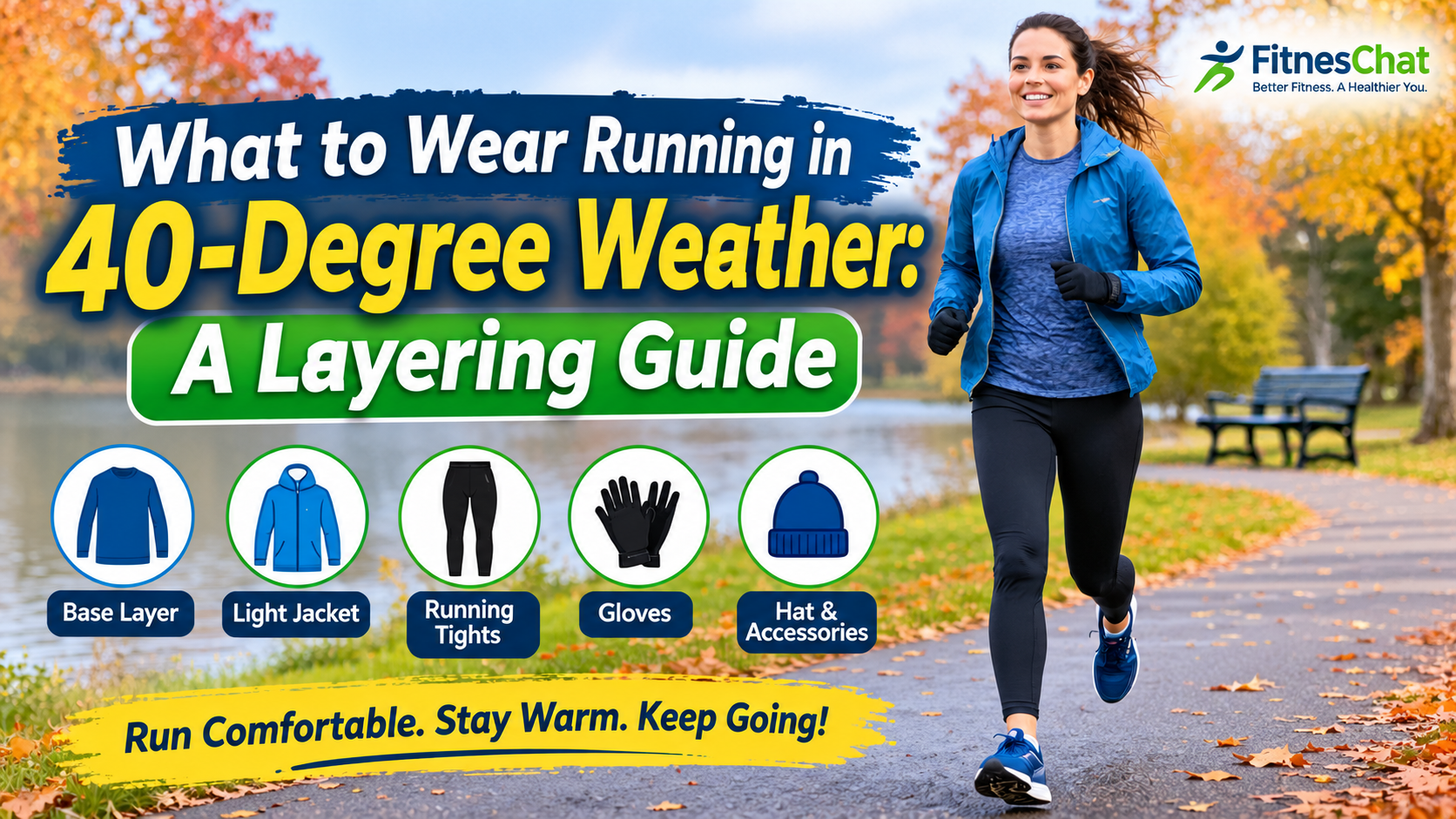
What to Wear Running in 40-Degree Weather: A Layering Guide
Running in 40-degree Fahrenheit weather (about 4°C) can feel cold when you first step outside. But once you start moving, your body warms up. Wearing too many clothes can make you sweat a lot, while wearing too few can leave you feeling uncomfortable.
The best approach is to dress in light layers that keep you warm, help move sweat away from your skin, and let you adjust to changing weather. Wind, rain, sunshine, and how fast you run all affect what you should wear.
This guide explains what to wear for a comfortable run in 40°F weather, from your base layer to your socks and gloves. It also includes simple tips for beginners.

Light layers help you stay comfortable when running in chilly weather.
Table of Contents
- What Does 40-Degree Weather Feel Like for Running?
- The Best Clothing Layers for a 40°F Run
- What to Wear From Head to Toe
- How Wind and Rain Change Your Outfit
- How to Dress for Different Types of Runs
- Common Layering Mistakes to Avoid
- Tips for a Comfortable Cold-Weather Run
- Frequently Asked Questions
- Key Takeaways
What Does 40-Degree Weather Feel Like for Running?
Forty degrees Fahrenheit is chilly, but it is often a comfortable temperature for running when you wear the right clothes.
At the start, you may feel cold while standing outside. After several minutes of running, your body begins to produce more heat. This is why an outfit that feels warm before your run may become too hot once you get moving.
Your ideal outfit depends on a few things:
- Wind: Wind can make exposed skin feel much colder.
- Rain: Wet clothing can leave you cold and uncomfortable.
- Running pace: A faster run usually creates more body heat than a slow walk or easy jog.
- Run length: A short run may need fewer layers than a long run.
- Personal comfort: Some people feel cold easily, while others warm up quickly.
A good starting point is to dress as if the weather were about 10–20 degrees warmer than the actual temperature. This is only a rough guide, not a strict rule. Wind, rain, your pace, and your own comfort may change what works best.
The goal is to feel slightly cool when you start, not cold enough to shiver.
The Best Clothing Layers for a 40°F Run
A simple layering system works well for most runners in 40°F weather. You usually do not need a thick winter coat.

1. Base layer: A sweat-wicking shirt
Wear a long-sleeve running shirt made from a fabric that moves sweat away from your skin. Polyester and other technical sports fabrics are common choices. Merino wool can also work well.
Avoid cotton as your main base layer on chilly runs because it can hold moisture and feel cold when wet.

2. Outer layer: A light running jacket
A thin wind-resistant jacket can help block chilly air. Look for one that breathes well and lets heat escape.
On a calm, dry day, you may not need a jacket if your base layer keeps you comfortable. If rain is expected, choose a running shell suited to the conditions.

3. Bottom layer: Running tights or pants
Full-length running tights are a reliable option for many runners. They cover your legs without adding much bulk.
If you prefer running pants, choose a lightweight pair that allows your legs to move freely. Thicker thermal tights may suit people who feel cold easily or run in windy conditions.
Should you wear one layer or two?
Use the weather and your own comfort to decide.
| Conditions | A useful starting outfit |
|---|---|
| Calm and dry | Long-sleeve technical shirt and running tights |
| Windy | Long-sleeve shirt, light wind-resistant jacket, and tights |
| Light rain | Sweat-wicking base layer and a lightweight running rain shell |
| You get cold easily | Long-sleeve shirt, light jacket, tights, and gloves |
| You warm up quickly | A breathable long-sleeve shirt and lighter running bottoms |
These are starting points, not rules. You can remove a layer if you become too warm, provided you have a safe place to store it.
What to Wear From Head to Toe
Your shirt and jacket matter, but small items can also make a big difference on a cold run.

Gloves for cold hands
Your hands may feel cold before the rest of your body does. Thin running gloves are a useful choice if your fingers get chilly.
Choose breathable gloves that let you move your fingers easily. You can take them off and put them in a pocket if your hands warm up.

Socks that manage moisture
Wear running socks that fit well and move sweat away from your feet. Avoid socks that bunch up inside your shoes, as they can cause rubbing.
Wool-blend or synthetic running socks can work well. Choose a thickness that fits your running shoes without making them too tight.

Running shoes with good grip
Your usual running shoes may be fine on dry pavement. If the path is wet, muddy, or slippery, choose footwear with suitable traction.
Make sure your shoes fit comfortably with your chosen socks. Do not wear a much larger or tighter shoe just to fit thicker socks.

A headband or light hat
If your ears feel cold, try a thin headband or lightweight running hat. You may not need one on a calm day, especially once you start warming up.
Pick something breathable and easy to remove.
Do you need a neck warmer?
Not always. At 40°F, many runners are comfortable without one. A light neck gaiter can help if the wind bothers your neck or face. Make sure it does not block your breathing or limit your view.
What about sunglasses?
Sunglasses can help on bright days, even when the air is cold. They may also protect your eyes from wind and dust. Choose a comfortable pair that stays in place while you run.
How Wind and Rain Change Your Outfit
The temperature on your weather app is only one part of the picture. Conditions can change how warm or cold you feel.
Running in 40°F weather with wind
Wind can carry heat away from your body, especially when your clothes are damp with sweat. A light wind-resistant jacket can make a big difference without adding a lot of weight.
You can also try running into the wind at the start of your route and turning back with the wind behind you. This may help reduce the chill near the end, when your body is tired or your clothes are damp.
Running in 40°F weather with rain
Rain makes clothing choices more important. Wet fabric can become uncomfortable, and cold wind can make you feel even chillier.
For light rain, consider:
- A sweat-wicking base layer.
- A lightweight jacket designed for running in rain.
- Running shoes with suitable grip for wet surfaces.
- A brimmed cap to help keep rain out of your eyes.
No jacket can keep you perfectly dry during every run. Breathability matters because sweat trapped inside a jacket can leave you just as wet as light rain.
If the weather includes thunderstorms, icy paths, or dangerous wind, consider running indoors or choosing another time.
Running in 40°F weather with sunshine
A sunny, calm day may feel warmer than a cloudy, windy one. You might be comfortable in a long-sleeve technical shirt and tights without an outer jacket.
Check the conditions before leaving and think about how warm you usually get while running. It is better to start with a light layer you can remove than to wear a thick coat that quickly becomes uncomfortable.
How to Dress for Different Types of Runs
Not every run produces the same amount of body heat. Use your workout plan to help choose your clothes.
| Type of run | Clothing to consider |
|---|---|
| Easy jog | Long-sleeve technical shirt, tights, and optional light jacket |
| Fast run or intervals | Breathable shirt and tights; use a light outer layer if needed before warming up |
| Long run | Comfortable layers, thin gloves if needed, and a jacket you can remove |
| Run-walk session | A light wind-resistant jacket may help because you cool down during walking breaks |
| Short beginner run | One suitable top layer and running tights may be enough in calm, dry weather |
For beginners
If you are new to running, start with a simple outfit rather than buying lots of cold-weather gear.
Try a long-sleeve moisture-wicking shirt, running tights, and thin gloves if your hands get cold. Add a lightweight jacket if it is windy or if you tend to feel chilly.
Run at an easy pace and check how you feel after the first several minutes. If you are sweating heavily or becoming uncomfortable, adjust your layers when it is safe to do so.
For long-distance runners
Long runs may bring changing conditions, especially if you are outside for an hour or more. Choose clothing that stays comfortable when damp and does not rub against your skin.
Think about the whole route, not just the weather when you leave home. If the temperature may drop, rain may begin, or you will finish after sunset, carry the extra protection you need.
Common Layering Mistakes to Avoid
A good running outfit should help you move freely and stay comfortable. These common mistakes can make a chilly run harder than it needs to be.
1. Wearing too many layers
A thick winter coat may feel great while standing still but become too hot once you start running. Too much clothing can cause heavy sweating and leave you damp.
Choose light, breathable layers instead.
2. Wearing cotton as your main running shirt
Cotton can absorb sweat and stay wet. In cool weather, that moisture may make you uncomfortable.
Technical synthetic fabrics or suitable wool blends are often better choices for running.
3. Forgetting about the wind
Forty degrees with little wind can feel very different from 40°F with strong gusts. Check the wind forecast and consider a wind-resistant outer layer when needed.
4. Wearing clothes that restrict movement
A jacket that pulls across your shoulders or tights that limit your stride can make running uncomfortable. Try your outfit at home before a longer run.
5. Ignoring your hands and ears
You may not need gloves or a hat every time, but they are easy to carry. If your hands or ears tend to get cold, bring lightweight protection.
6. Ignoring wet or slippery paths
The right clothes do not make an unsafe route safe. Slow down on wet surfaces, watch for slick leaves, and avoid icy areas when possible.
7. Assuming everyone needs the same outfit
Two runners can feel very different in the same weather. Your pace, experience, body, and personal comfort all matter.
Use general clothing guides as a starting point, then adjust based on how you feel.
Tips for a Comfortable Cold-Weather Run
Use these simple steps before and during your run.
Check the full forecast.
Look at temperature, wind, rain, and the conditions expected during your entire run.
Choose breathable clothing.
Your clothes should help manage sweat and allow free movement.
Start with a gentle warm-up.
Walk briskly or begin jogging easily before moving to your planned pace.
Make layers easy to remove.
A jacket with a pocket or a safe place to store an extra layer can help you adjust.
Pay attention to how you feel.
If you are too hot, too cold, dizzy, or unusually uncomfortable, slow down or stop and address the problem.
Plan for visibility.
If you run in dim light, wear reflective details and use suitable lights so that other people can see you.
When should you run indoors instead?
Consider a treadmill or indoor workout if conditions make outdoor running unsafe. Examples include icy sidewalks, dangerous storms, or wind that makes it difficult to stay balanced.
If cold exposure causes persistent numbness, severe shivering, confusion, or loss of coordination, stop exercising and seek appropriate help. If you have a condition that affects your response to cold, ask a qualified healthcare professional for advice about exercising outdoors.
Frequently Asked Questions
1. Is 40 degrees too cold to run outside?
No. Many people can run comfortably at 40°F (about 4°C) with suitable clothing. Check wind, rain, and the path conditions before heading out, and dress for your own comfort.
2. Should I wear a jacket when running in 40-degree weather?
A lightweight jacket is useful when it is windy, rainy, or you tend to feel cold. On a calm, dry day, a long-sleeve technical running shirt may be enough for some runners.
3. Are shorts okay for running at 40°F?
Some runners prefer shorts at this temperature, especially during fast workouts. Others find full-length tights more comfortable. If you are new to cold-weather running, tights are a reasonable starting point.
4. Should I wear gloves at 40 degrees?
Wear thin running gloves if your hands get cold. You can remove them once your body warms up. If the wind is strong, gloves may be especially helpful.
5. Is a hoodie good for running in 40-degree weather?
A lightweight sports hoodie can work if it breathes well and does not hold too much sweat. A thick cotton hoodie may become heavy and damp, so a technical running top is often a better choice.
6. What should I wear for a 30-minute run at 40°F?
For calm, dry weather, try a long-sleeve moisture-wicking shirt, running tights, running socks, and suitable shoes. Add thin gloves or a light jacket if needed.
7. Should I wear thermal running tights at 40 degrees?
Usually, lightweight running tights are a good starting point. Thermal tights may be useful if you feel cold easily or the weather is windy. Avoid choosing heavy clothing that makes you overheat.
8. How many layers should I wear for running at 40°F?
One or two upper-body layers are often enough. You might wear a technical long-sleeve shirt alone or pair it with a light jacket. The right number depends on wind, rain, your pace, and personal comfort.
9. How should I dress for running in 40-degree rain?
Choose a sweat-wicking base layer and a lightweight running shell that handles rain. Wear shoes with suitable grip and slow down on slippery paths. If the weather is dangerous, run indoors instead.
10. What should I wear if I feel cold during my run?
If you feel mildly chilly, adjust your pace or add a layer when practical. If you are shivering strongly, becoming numb, or feeling unwell, stop and get somewhere warm. Do not push through signs of cold-related illness.
Key Takeaways
- Forty degrees Fahrenheit is often suitable for outdoor running with the right clothing.
- A moisture-wicking long-sleeve shirt is a useful base layer.
- Add a lightweight wind-resistant or rain-resistant jacket when conditions call for it.
- Running tights, thin gloves, and comfortable running socks can help you stay warm.
- Avoid too many layers, since heavy sweating can leave you damp and uncomfortable.
- Adjust your outfit to the wind, rain, pace, run length, and personal comfort.
- Choose a safe route and consider indoor exercise when outdoor conditions are dangerous.
Conclusion
Running in 40-degree weather does not need to be complicated. Start with a breathable long-sleeve shirt and comfortable running tights. Add a light jacket, gloves, or a headband if the conditions or your personal comfort call for them.
Remember that you will warm up as you run. You do not need to feel perfectly warm while standing outside, but you should not be shivering or uncomfortable. Check the forecast, wear suitable shoes, and make small adjustments until you find an outfit that works for you.
With a little planning, chilly weather can be a comfortable time to keep up your running routine.
Medical disclaimer: This article is for general educational purposes only. It is not a substitute for professional medical advice. If you have a health condition that affects exercise or your response to cold, consult a qualified healthcare professional before changing your routine.